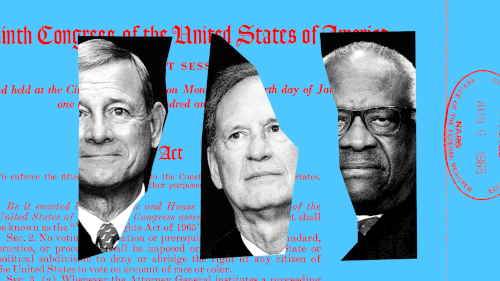
The Voting Rights Act, or VRA, is viewed as the most important piece of legislation advancing civil rights in the 1960s. Passed in 1965, it was intended to redress the dis-empowerment of African Americans whose voting rights had been restricted due to several states legislation, ranging from poll taxes to literacy tests and other restrictions on voting. Throughout the Roberts Court, the VRA has been restricted and its protections stripped away. In 2026, perhaps the last of these provisions have been overturned, in a decision in the case Louisiana v Callais.
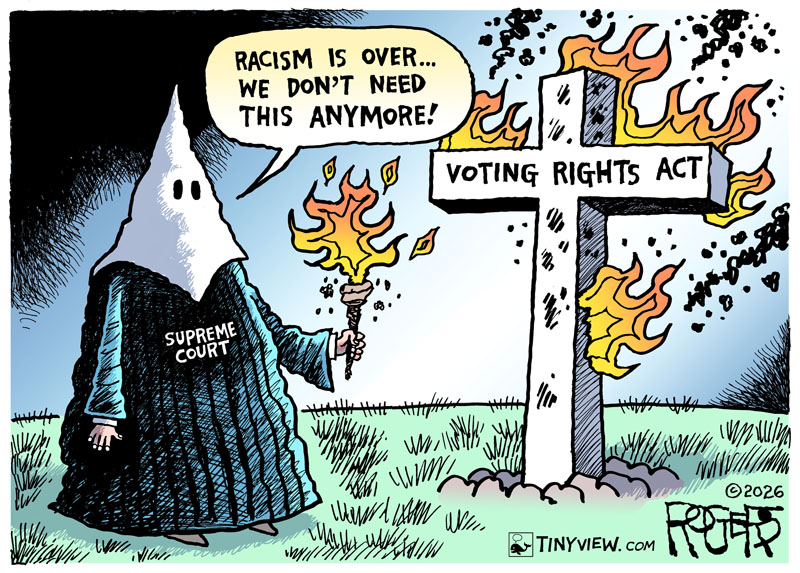
On todays show, we will explore this decision and the impact it has on drawing Congressional districts, in an era of particularly aggressive gerrymandering. [ dur: 58mins. ]
- Eric J. Segall, Ashe Family Chair Professor of Law and the Executive Director of Emmet J. Bondurant Center for Constitutional Law, Practice and Democracy at Georgia State University. He is the author of Originalism as Faith and Supreme Myths: Why the Supreme Court Is Not a Court and Its Justices Are Not Judges.
- Seth C. McKee is a Professor of Political Science at Oklahoma State University. He is the author of The Dynamics of Southern Politics: Causes and Consequences and coauthor of Rural Republican Realignment in the Modern South: The Untold Story with MV Hood.
- Christian Grose is a Professor of Political Science & Public Policy and the Academic Director of the USC Schwarzenegger Institute for State and Global Policy at the University of Southern California. He is the author of Independent Redistricting Commissions Increase Voter Perceptions of Fairness and co-author of Local Election Administrators in the United States: The Frontline of Democracy.
This program is produced by Doug Becker, Ankine Aghassian, Maria Armoudian, Anna Lapin and Sudd Dongre.
Politics and Activism, Elections, Redistricting, Voting Rights, Congress, Courts, Democrats, Republicans
Podcast: Play in new window | Download (Duration: 57:59 — 53.1MB) | Embed
Subscribe: Apple Podcasts | Spotify | RSS